
Uzbekistan Travel Guide: The Silk Road's Best-Kept Secret
What if you could walk through a living museum where towering blue domes pierce the sky, spice-filled bazaars have operated for millennia, and a hot air balloon ride costs less than a fancy dinner back home?
That place is Uzbekistan.
Once the heart of the legendary Silk Road, this Central Asian nation has quietly become one of the most exciting—and affordable—travel destinations on the planet. Whether you are a history buff, a foodie, or a photographer chasing epic shots, Uzbekistan delivers an experience you will never forget. Here is your complete guide.
🌏 Where Exactly is Uzbekistan?
Uzbekistan is a double-landlocked country (meaning it is surrounded entirely by other landlocked nations) located in the heart of Central Asia. It shares borders with five countries: Kazakhstan to the north, Kyrgyzstan to the northeast, Tajikistan to the southeast, Afghanistan to the south, and Turkmenistan to the southwest.
Covering an area of 448,900 square kilometers, its landscape is a dramatic mix of red sands (the Kyzylkum Desert), fertile river valleys (the Fergana Valley), and snow-capped mountain ranges in the east.
The capital is Tashkent, a modern metropolis with a fascinating Soviet past and the most beautiful metro system you will ever see. Other major cities include Samarkand, Bukhara, and Khiva – names that once conjured magic for ancient traders crossing the desert.
🎭 The Culture: Where Hospitality is a Religion
Uzbek culture is a rich tapestry woven from Persian, Turkic, Russian, and Mongol threads. But what you will remember most is the people.
- The Art of Hospitality: The saying goes, “A guest is a blessing from God.” When you visit Uzbekistan, expect to be invited into homes for tea, offered fresh bread (non), and treated like family.
- Craftsmanship: This is a nation of artisans. From the bright blue ceramics of Rishtan to the hand-woven Yodgorlik Silk Factory in Margilan, traditional crafts are alive and thriving.
- The Mahalla: Uzbek society is built around the mahalla (neighborhood community), where everyone knows everyone. Walking through these narrow alleys in the evening, you will smell fresh bread baking and hear children laughing – it is the true heartbeat of the country.
📅 Best Time to Visit Uzbekistan (The "Sweet Spot")
Because Uzbekistan has a sharply continental climate, timing your visit is crucial for comfort.
- The Goldilocks Zone (April to June & September to October): This is, without a doubt, the best time to visit. During spring and autumn, the weather is mild (20°C to 30°C / 68°F to 86°F), the skies are clear, and the parks are in full bloom. This is the perfect window for walking tours of Samarkand and Bukhara.
- The “Chilla” (June to August): Avoid the low-elevation cities in summer if you hate heat. The locals call the scorching 40-day period “Chilla,” where temperatures can soar past 40°C (104°F) in the shade. If you must go in summer, stick to the mountains or plan for early morning/evening sightseeing.
- Winter (December to February): Cold (dropping to -8°C / 17°F), but magical. This is the low season, meaning fewer tourists and lower prices. Just be prepared for snow and freezing temperatures.
🕌 Top Attractions (The "Big Four" & Beyond)
You cannot visit Uzbekistan without seeing these iconic sights. They are the reason travelers brave the desert heat.
- Samarkand: The “Eden of the Ancient East”
This is the crown jewel. Samarkand was the capital of Timur (Tamerlane)‘s vast empire, and the architecture is mind-blowing.
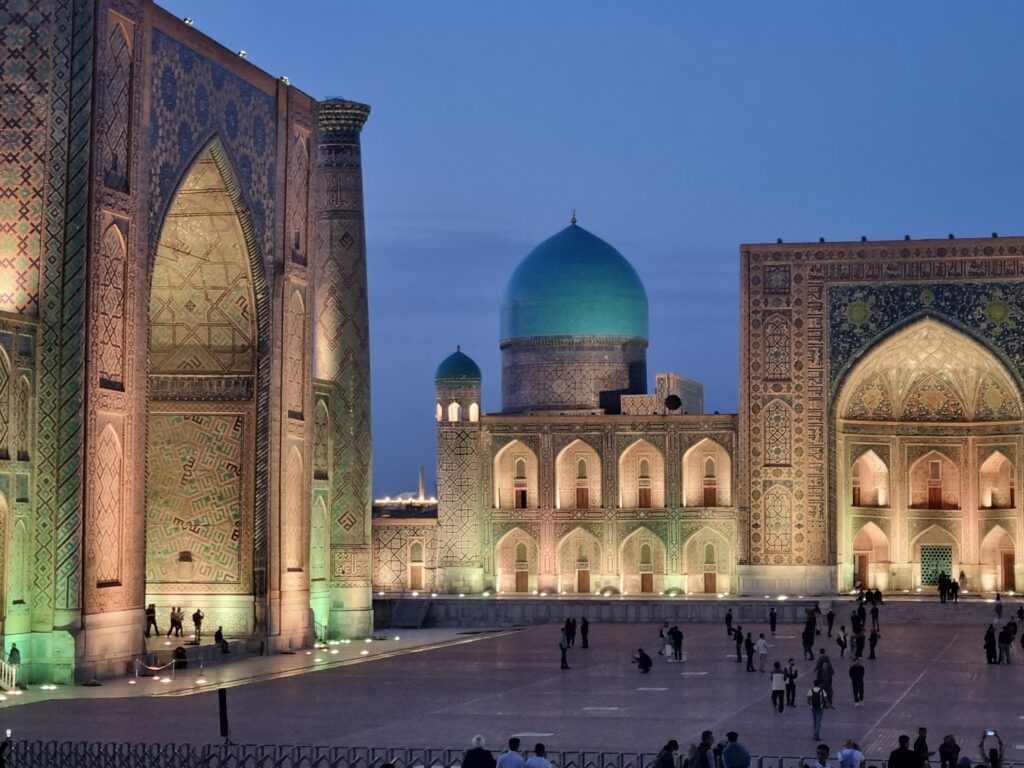
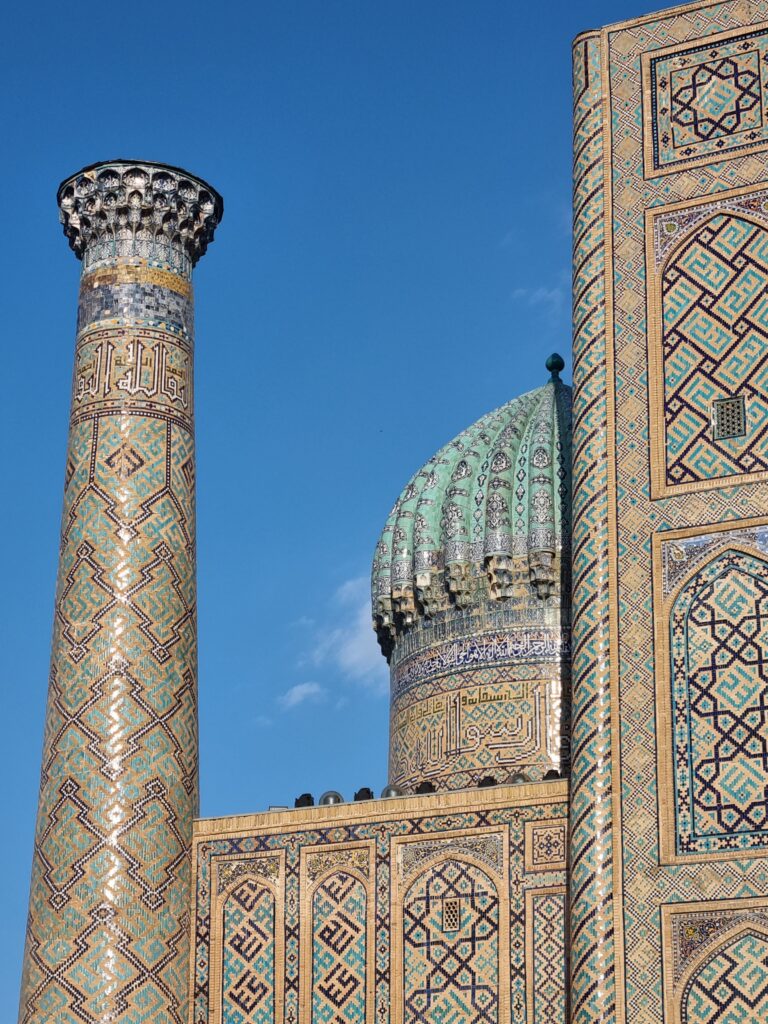
- Registan Square: The undisputed highlight. Three massive madrasahs (Islamic schools) frame a square that will make your jaw drop. The intricate blue mosaics and turquoise domes are world-famous.
- Shah-i-Zinda Necropolis: A stunning avenue of mausoleums draped in brilliant blue tiles. It is one of the most Instagrammable spots in the country.
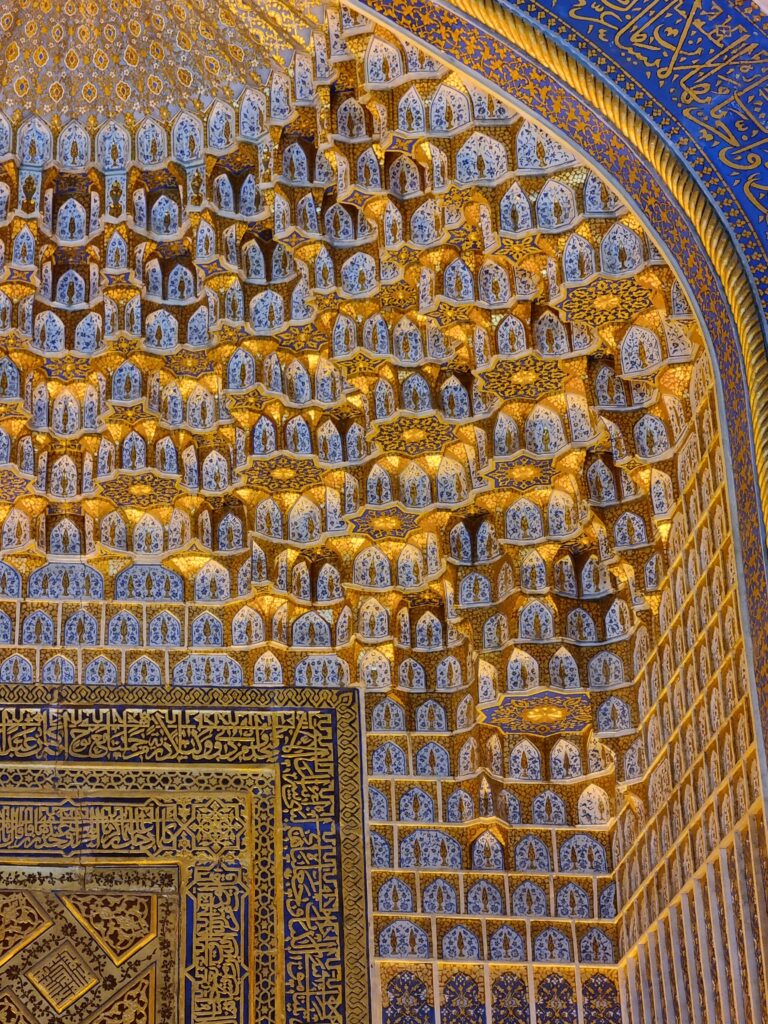
- Gur-e-Amir Mausoleum: The final resting place of Timur himself. The interior is dripping with gold leaf.
- Bukhara: The “Museum City”
If Samarkand is grand, Bukhara is intimate and authentic. Unlike other cities, Bukhara feels lived-in.
- The Ark Fortress: A massive royal fortress that served as a town-within-a-town for over a millennium.
- Lyab-i-Hauz: A serene pond surrounded by centuries-old mulberry trees and madrasahs. This is the best place in the country to sit, drink tea, and watch the world go by.
- Trade Domes: Walk through the ancient, vaulted bazaars where merchants still sell silk and spices just as they did on the Silk Road.
- Khiva: The “Pearl of the Desert”
Khiva looks like a movie set – but it is real. The entire old town, Itchan Kala, is a UNESCO World Heritage Site surrounded by thick defensive walls.
- Kalta Minor Minaret: A stunning, turquoise-covered minaret that was meant to be the tallest in the Islamic world – but the Khan died before it was finished.
- Juma Mosque: Unlike any other mosque, this one is a dark forest of 213 wooden columns, each carved with a unique pattern.
- Tashkent: The Modern Capital
Don’t skip the capital just because it is “new.” The earthquake of 1966 destroyed much of the city, forcing a rebuild that resulted in fascinating Soviet-era architecture.
- Tashkent Metro: It is not just transport; it is an underground art gallery. Each station is uniquely decorated with chandeliers, marble, and communist-era murals.
- Hazrati Imam Complex: A beautiful religious center housing the Uthman Quran – the world’s oldest Quran, dating to the 7th century.
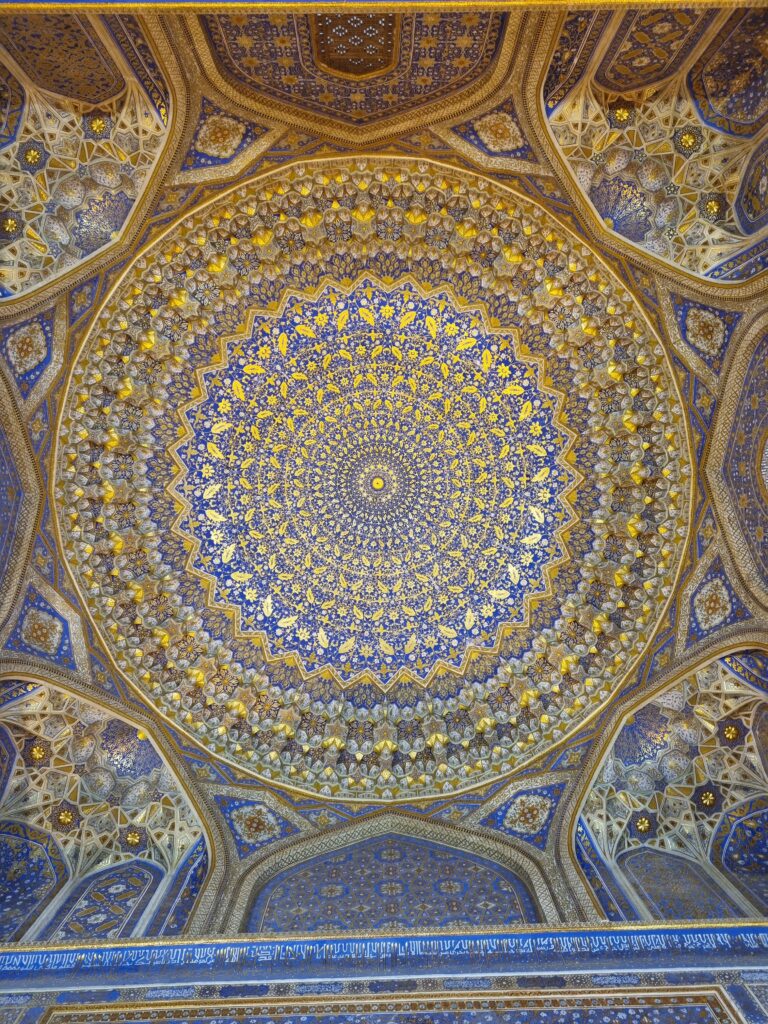
🏞️ Scenic Views: Beyond the Cities
While Uzbekistan is famous for its cities, the landscapes are equally stunning.
- The Kyzylkum Desert: Book a yurt camp for a night in the desert. This is where you can see the Milky Way in complete darkness and ride a camel through the dunes.
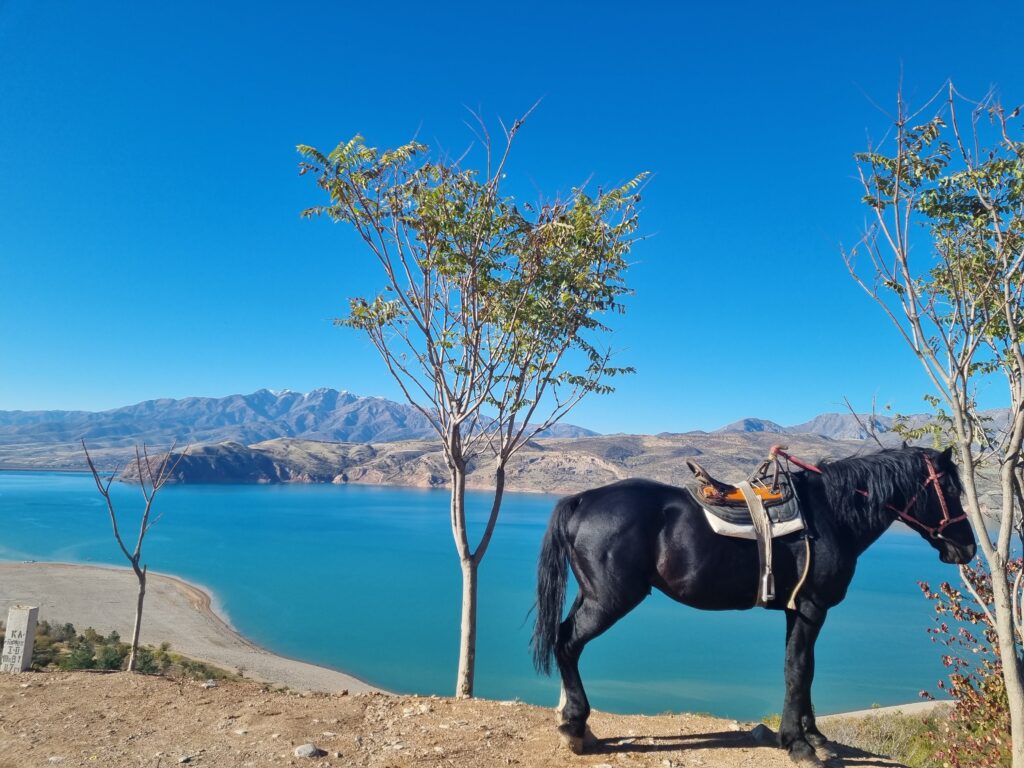
- Lake Charvak & Chimgan Mountains: Just a 90-minute drive from Tashkent, this is the local escape. In summer, the turquoise reservoir is perfect for swimming, while the surrounding mountains offer great hiking.
- The Aral Sea (Nukus): A hauntingly beautiful wasteland. Near the autonomous Republic of Karakalpakstan, you can see the “ship graveyard” – fishing boats rusting in the middle of the desert where a sea once stood.
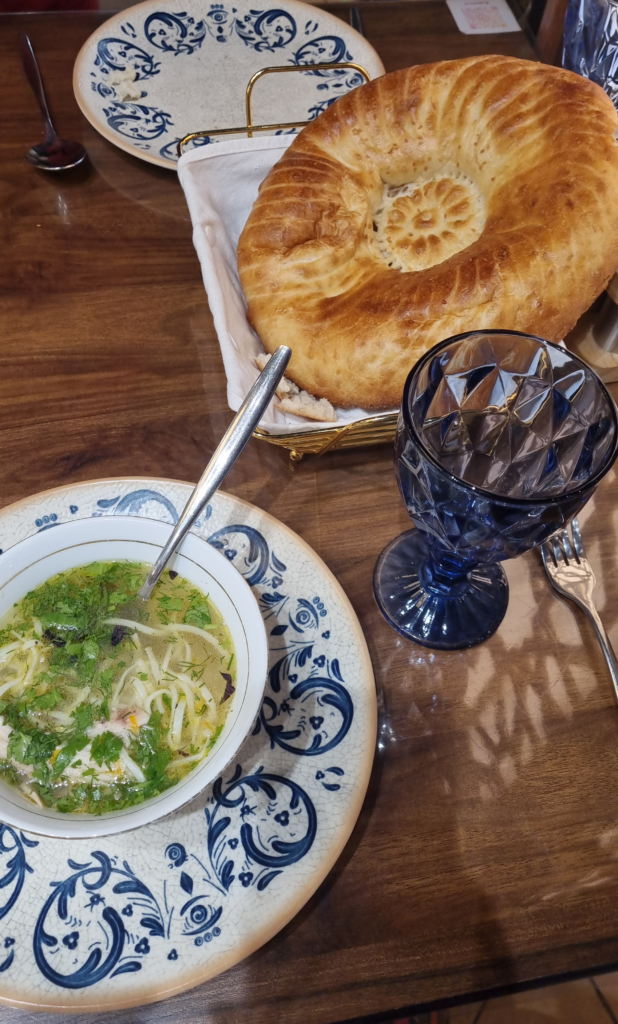
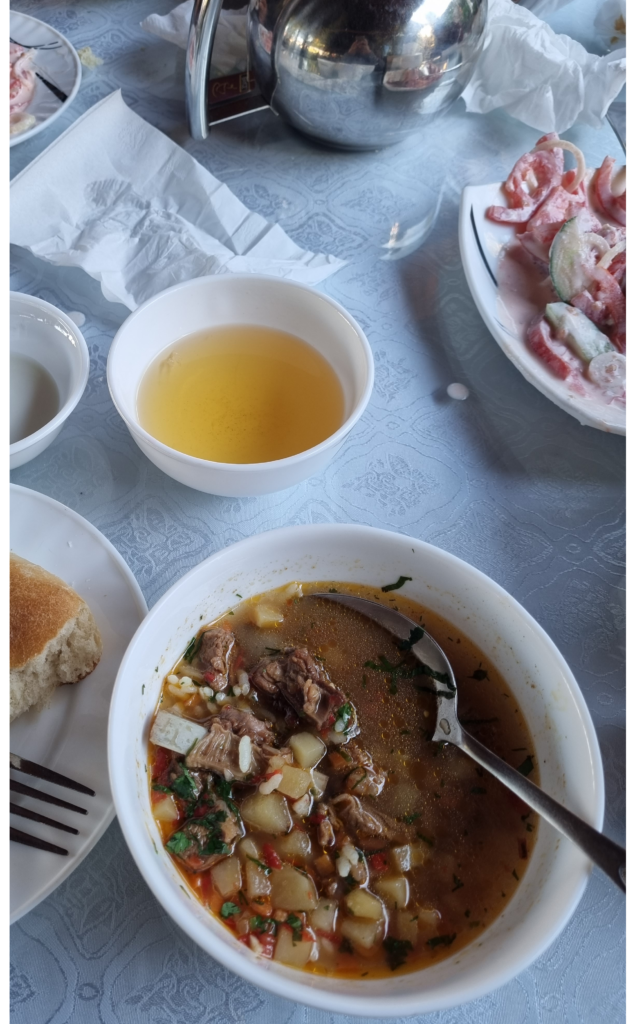
🍛 Traditional Food: A Culinary Wonderland
Uzbek food is hearty, meaty, and deeply satisfying. It is a fusion of nomadic and settled traditions.
- Plov (The King of Dishes): The national dish. Forget what you know about rice. Uzbek plov is slow-cooked lamb, yellow carrots, cumin, and rice, often topped with quail eggs or horse sausage. It is usually cooked in a massive kazan (cauldron) over an open fire.
- Shashlik: Marinated chunks of lamb or chicken grilled over charcoal skewers. It is the ultimate street food, usually served with raw onions and a vinegar dipping sauce.
- Manti: Steamed dumplings the size of your fist, filled with spiced lamb or pumpkin. Eat them with a dollop of sour cream.
- Lagman: Hand-pulled noodles served in a spicy, tangy broth of meat and vegetables. Think of it as the Uzbek version of ramen.
- Samsa: Flaky pastry triangles stuffed with fatty lamb and onions, baked in a clay tandoor oven. The crunch is addictive.
- Non (Bread): Never waste bread. The round flatbread is sacred. It is stamped with a pattern (chekich) and baked fresh daily. Eating it with butter and honey for breakfast is a highlight.
Pro Tip: Finish every meal with green tea and a slice of melon in summer. Uzbek melons are legendary for their sweetness.
✨ Final Verdict
Uzbekistan offers something that is getting harder to find in travel: authentic adventure at an affordable price. It is safe, welcoming, and packed with enough history to fill a dozen textbooks.
Ready to follow the Silk Road? Plan your trip for May or September to catch the perfect weather and the warmest hospitality on Earth.


Logging in is a breeze and the account verification was surprisingly quick. I really appreciate the efficiency of lotusdewalogin.
Best slot experience I’ve had in a while. The RTP seems decent and the animations are great. Check out bolaslot888 if you’re feeling lucky today.
I really appreciate the stability of this site. No more annoying crashes during big wins. Just a solid and trustworthy platform at jilimaxlogin.
Best gaming experience I have had in a while. The payouts are fast and the games are legit. Highly recommend phjilibee to all my friends.
The slot variety is insane! I spent hours trying different games and they all look stunning. Big wins are actually possible at jilicashslot
The VIP rewards are actually worth it. I’ve never felt more appreciated as a player than at br5526vip
I love the daily bonuses and the competitive odds. It keeps the game exciting every single time I log in. See you at aa44bet.
Finally found an app that doesn’t lag! The slot selection is massive and the bonuses are actually fair. It’s my go-to for some quick fun during my break. Highly recommend okplayslotapk
I’ve been playing here for a few weeks and the payouts are surprisingly fast. Definitely one of my new favorite spots to hang out and win. Check it out at phjlj555
Finally found a site that doesn’t lag during peak hours. The interface is super clean and getting in is a breeze. Highly recommend ph7777login for a hassle-free session.
The slot selection is massive and the hit rate seems much better than other sites I have used. Really enjoying the vibe here. Try 50jilislot
The game selection is top notch. I spend most of my free time exploring the slots on q98game.
I’ve been looking for a reliable platform and this one really delivers. The games are smooth and the payouts are fast. Definitely check out brbet777bet if you want a great experience.
Really friendly community and a fair system. I’ve had some lucky wins here and the withdrawal process was surprisingly fast. Visit vnxr88
Really impressed with the layout and the variety of options here. It is easy to navigate and the rewards are great. plataformaboxwin is a solid choice for any player.
Super addictive games and the daily rewards keep me coming back. I have told all my friends to join phjilii already!
I was skeptical at first but this site really delivers. The game variety is amazing and I had no issues with my first withdrawal. Love krawin68 so far!
Really impressed with the fast payouts and the overall interface. It makes everything so much easier. Highly recommend bdsky999 to everyone.
Best spot for football betting. The odds are competitive and the live updates are spot on. Always go with idautobola for sports betting.
Quick and secure access every time. I appreciate the stability of this portal. For the fastest entry go with bosku777login.
The graphics are stunning and the gameplay is top notch. I am having a blast on ph22jilicrown!
Finally found a site that doesn’t lag during peak hours. The interface is super intuitive and getting started was a breeze. Check out megawin777login if you want a smooth experience.
The login process is quick and the security feels solid. I love the overall aesthetic of the site. Keep up the great work phskycasinologinph!
Finally found a site that actually pays out fast. I was a bit skeptical at first but bdrk7777 proved me wrong. Great experience so far!
Best gaming site I have encountered in Asia this year. The customer support is top notch. Visit jljl7asia
The game variety is impressive and the graphics are top notch. I spend most of my free time here now. You guys should check out phabjili if you love variety.
Really impressed with the variety of options available here. It feels professional and secure, which is exactly what I need. bar222plataforma is definitely top-tier.
Finally found a reliable source for the app. The installation was a breeze and it runs perfectly on my phone without any lag. Thanks for providing a safe way to get yoswinappdownload. yoswinappdownload
Easy login and a very welcoming community. I love how straightforward everything is here. No hassle at all with pkkkclublogin
The game variety is just insane and the interface is super easy to navigate. Really enjoying the vibes here. Highly recommend phjilico to everyone!
The app is incredibly stable and the graphics are crisp. It makes gaming on the go so much better. You should definitely give ctayaapp a try.
Been playing here for a month now and the bonuses are legit. It is a great place for anyone looking for reliable wins. Check out vnnohu188.
The graphics are amazing and the gameplay is very addictive. I spend a lot of my free time here and I’m always winning. Try mc888slot
Love the variety of slots available. It feels very fair and the customer support is actually helpful. Give pkxs777 a try!
Solid experience overall. The graphics are crisp and the navigation is very intuitive for new players. Love 4444wim
I’ve been trying a few different sites lately and this one really stands out. The interface is smooth and the payouts are quick. Definitely recommend checking out affunbet for a great experience.
Finally found a platform that doesn’t lag during peak hours. The bonus offers are quite generous for new players. Check out vn0a88 if you want a fair game.
Super reliable platform. I’ve tried many others but this one feels the most secure and honest. The rewards are awesome too. vnvic88
Easy access and no hassle at all. I appreciate how straightforward the site is without all the unnecessary clutter. jili988login is a winner.
Super clean layout and very responsive. I can get my games started in seconds without any annoying glitches. Love using phjili0.